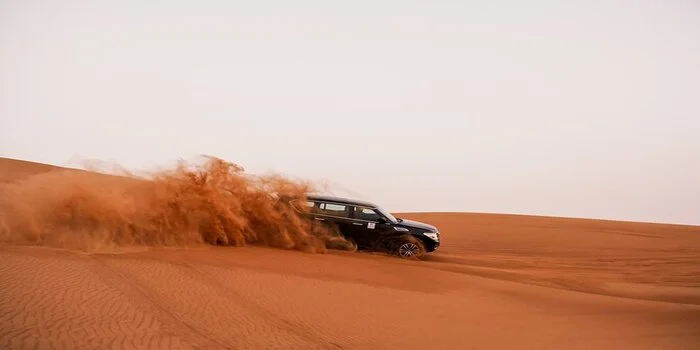
Driving a car in the desert during a Dubai desert safari is very different from driving on roads, highways, or even off-road trails. Sand behaves unlike any other surface—it shifts, sinks, and reacts instantly to weight and speed. That’s why desert driving is both exciting and risky if not done correctly.
Many visitors ask whether they can drive themselves during a desert safari in Dubai. The short answer is yes—but only with proper knowledge, preparation, and respect for the desert. This guide explains exactly how desert driving works, what skills are required, and why professional drivers are usually the safer choice.
Understanding Desert Driving in Dubai
Desert safari driving in Dubai usually takes place in red sand dune areas such as Lahbab, Al Badayer, and Al Faqa. These dunes are steep, soft, and constantly changing shape due to wind.
Unlike normal driving:
-
There are no fixed tracks
-
Sand can collapse under tires
-
Braking behaves differently
-
Steering requires anticipation, not reaction
Desert driving is closer to controlled sliding than standard off-road driving.
Can Tourists Drive a Car in a Desert Safari?
Tourists cannot drive safari vehicles during commercial desert safari tours. UAE regulations require:
-
Licensed professional drivers
-
Registered 4×4 vehicles
-
Insurance for passengers
However, tourists can drive in the desert privately if:
-
They rent a 4×4 vehicle
-
They have a valid driving license
-
They drive in permitted desert areas
-
They are not part of a commercial safari
Most first-time visitors should not attempt self-driving in deep dunes.
Choosing the Right Vehicle for Desert Driving
Only true 4×4 vehicles should be used in Dubai’s desert. Suitable vehicles include:
-
Toyota Land Cruiser
-
Nissan Patrol
-
Toyota Prado
-
Jeep Wrangler (experienced drivers only)
SUVs with AWD or city crossovers are not suitable and can easily get stuck.
Key vehicle requirements:
-
Low-range 4×4 mode
-
Strong engine torque
-
High ground clearance
-
Recovery hooks
Tire Pressure – The Most Important Step
Before entering the desert, tire pressure must be reduced. This increases the tire’s surface area, allowing it to float over sand rather than sink.
Typical desert tire pressure:
-
12–15 PSI (depending on vehicle and sand softness)
Driving on sand with normal road pressure is one of the main reasons vehicles get stuck.
Professional safari drivers always deflate tires before dune driving.
Basic Desert Driving Techniques
1. Maintain Momentum
Momentum is your friend in the desert. Stopping suddenly on soft sand often leads to getting stuck.
-
Keep steady speed
-
Avoid sharp braking
-
Never stop on steep dune slopes
2. Use Gentle Steering
Sudden steering inputs can cause loss of control or rollovers.
-
Turn smoothly
-
Anticipate dune shapes
-
Avoid sharp corrections
3. Climb Dunes at an Angle
Driving straight up a dune is risky.
-
Approach dunes diagonally
-
Reduce speed near the crest
-
Never accelerate hard at the top
This prevents flipping or dropping over unseen slopes.
How Professional Safari Drivers Handle Dunes
Professional desert safari drivers in Dubai:
-
Read dune shapes visually
-
Adjust speed instinctively
-
Control slides intentionally
-
Communicate via radio
-
Avoid dangerous dune crests
This skill comes from years of desert experience, not just driving ability.
That’s why self-driving is discouraged for beginners.
Descending Dunes Safely
Descending dunes is where most accidents occur.
Rules for safe descent:
-
Engage low gear
-
Do not brake suddenly
-
Let gravity control speed
-
Keep wheels straight
-
Never descend blindly
Professional drivers stop at dune edges to inspect the slope before descending.
Common Mistakes First-Time Desert Drivers Make
-
Driving too fast
-
Over-braking
-
Panic steering
-
Stopping on soft sand
-
Driving alone without backup
-
Ignoring weather conditions
Even experienced city drivers struggle in the desert initially.
Safety Equipment You Should Carry
If driving privately in the desert, always carry:
-
Air compressor
-
Tow rope
-
Shovel
-
GPS or offline maps
-
Two-way radio or phone with signal
-
Extra water
Driving alone in deep desert areas is not recommended.
Why Desert Safari Tours Don’t Allow Guests to Drive
Commercial desert safari companies do not allow guest driving because:
-
Insurance restrictions
-
Passenger safety laws
-
High rollover risk
-
Liability issues
Instead, guests enjoy the experience safely as passengers while trained drivers handle the dunes.
Is Dune Bashing Dangerous?
Dune bashing is safe when done by licensed professionals. Vehicles are:
-
Modified for desert use
-
Regularly inspected
-
Driven within controlled limits
Accidents usually happen during unauthorized self-driving, not guided safaris.
Desert Driving vs Off-Road Driving
Desert driving is more technical than regular off-roading because:
-
Sand shifts constantly
-
Traction changes instantly
-
Visual depth is misleading
-
Recovery is harder
That’s why desert safari Dubai driving is treated as a specialized skill.
Should You Try Driving Yourself in the Desert?
If you are:
-
A beginner
-
Visiting Dubai for a short time
-
Unfamiliar with desert terrain
👉 Choose a professional desert safari instead
If you are:
-
An experienced off-road driver
-
Familiar with dune driving
-
Equipped with proper vehicle and tools
👉 Self-driving is possible but still requires caution.
Legal Rules for Desert Driving in Dubai
-
Driving in restricted desert areas is prohibited
-
Wildlife reserves are off-limits
-
Racing on dunes is illegal
-
Reckless driving can lead to fines or vehicle confiscation
Always check local guidelines before entering desert areas.
Why Desert Driving Looks Easy but Isn’t
From the passenger seat, dune driving looks smooth and effortless. In reality, drivers are:
-
Constantly adjusting throttle
-
Reading sand texture
-
Predicting dune collapse
-
Balancing speed and control
This is why desert safari driving is considered a professional skill in Dubai.
Final Thoughts
Driving a car in a desert safari environment in Dubai requires experience, preparation, and respect for the desert. While self-driving is possible in certain conditions, the safest and most enjoyable way to experience dune driving is with a licensed safari driver.
For most visitors, sitting back and letting professionals handle the dunes allows you to enjoy the thrill without the risk.
FAQs – How to Drive a Car in Desert Safari Dubai
Can tourists drive during a desert safari in Dubai?
No. Commercial desert safari tours do not allow guests to drive.
Can I rent a car and drive in the desert myself?
Yes, but only with a proper 4×4 vehicle and experience.
Is a normal SUV suitable for desert driving?
No. Only true 4×4 vehicles should be used.
Why do safari drivers reduce tire pressure?
Lower pressure increases traction and prevents sinking.
Is desert driving dangerous for beginners?
Yes, without training or guidance it can be risky.
What happens if a car gets stuck in sand?
It requires recovery tools or assistance from another vehicle.